|
The 1911 Pistol Is Its Own Toolbox!
By John L. Marshall
It’s pretty well agreed that one of the top
firearms inventors of the 20th Century was John Moses
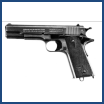
Browning. One of his finest creations was the U.S. Pistol, Model of
1911. Browning designed this pistol to be suitable for use by the U.S.
military services, and in this he succeeded admirably. Although 90
years have elapsed since the pistol was adopted for service, it is
still in use by U.S. military units, and very much in demand in the
civilian sector. Less generally known is that Browning designed many
parts of the 1911 pistol to be used as tools in its own disassembly
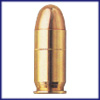
and assembly. Even the .45 ACP cartridge itself could be used for work
on the gun!

Some of the parts of the 1911 pistol used as
disassembly/assembly tools
Have you ever wondered why the slots in the grip
screws on the big .45 are concave rather than simply flat? Wonder no
more. Browning designed those screws so that the rim of the .45 ACP
cartridge could be used to unscrew them! You don’t need a
screwdriver for this task if you have a single cartridge available!
Once the manual safety is removed, the safety and
slide stop plungers can be withdrawn and used to drift out the hammer
pin.
The hammer strut is far and away the most useful
tool provided with the 1911 pistol. It can be used to drift out the
mainspring housing pin and the sear pin both. It also serves to press
in on the firing pin so that the firing pin stop can be removed, and
then it works to pry out the extractor. It can be used to drift out
the link pin from the barrel on those pistols where the link pin is
not staked in place. It can also be used to retain the depressed
magazine spring when inserted in an inspection hole, so that the
magazine follower can be removed! Some modern-manufacture 1911-style
pistols have a flat end to the hammer strut. While this design
functions acceptably and is easier to manufacture, it subverts one of
this part’s intended uses: it can’t be used very well as a drift
punch. The flat variety can be filed down to the round shape. It’s
worthwhile to do it.

The hammer strut is used to drift out or pry out
several parts
The shaft of either the slide stop or the manual
safety can be used to depress the mainspring cap while the firing pin
is used to start the mainspring cap pin out of its hole to free the
mainspring, its cap, and the mainspring housing pin retainer.
That little bent piece at the end of the leaf-style
sear spring can be used to twist the magazine catch spring guide to
remove the magazine catch and its spring.
The magazine follower can be used to depress the
safety plunger while the manual safety is being reinserted in place.
Here’s the lowdown on complete disassembly of the
pistol, using only the pistol and its cartridge for tools:
First, clear the pistol of any cartridges by
removing the magazine and then retracting the slide to remove any
round in the chamber. Inspect the chamber carefully to be absolutely
sure the pistol is unloaded before proceeding.
Next, apply the manual safety and press in on the
recoil spring plug, which will allow the barrel bushing to be rotated
clockwise. Carefully remove the recoil spring plug, which is under
spring pressure.
Release the manual safety and pull the slide back
until the disassembly notch in the slide lines up with the end of the
slide stop. Remove the slide stop from the frame. Slide the slide and
barrel assembly forward off the frame.
Remove the barrel bushing by rotating it
counterclockwise. Remove the recoil spring and the recoil spring plug
from the slide. Tip the barrel link forward, and remove the barrel and
its link forward through the muzzle of the slide.
Cock the hammer and with the manual safety midway
between the off and on positions, wiggle it out of the frame. Lower
the hammer. With the fingertips, remove the safety and slide stop
plungers with their attached spring from the plunger tube.
Use one of the removed plungers inserted from the
right of the frame to start the hammer pin from its seat. Remove the
hammer pin, and remove the hammer and its strut.
Use the hammer strut, with the hammer attached, to
drift out the mainspring housing pin. Remove the mainspring housing.
Remove the grip safety and the leaf-style sear spring.
Use the hammer strut to remove the sear pin, drifting it out from
right to left. Shake out the sear and disconnector

Use the tip of the sear spring to remove the
magazine catch assembly
Partially depress the magazine catch, and use the
little right-angled bent portion of the leaf-style sear spring to
rotate the magazine catch spring guide counterclockwise. The magazine
catch can now be removed. Use the same part to rotate the magazine
catch spring guide clockwise to allow the guide and its spring to be
removed from the magazine catch body.
The trigger can now be pressed to the rear and
withdrawn from the frame.
Use the hammer and its strut to press in on the
firing pin, allowing the firing pin stop to be slid down and out of
the slide. Remove the firing pin and its spring. Use the hammer strut
to pry the extractor out of its hole in the slide.
While it’s not recommended for normal disassembly because the
mainspring is under heavy compression, the mainspring housing can be
taken apart using the shaft of the slide stop or the manual safety to
depress the cap while the firing pin starts the retaining pin out of
its hole. Keeping pressure on the cap with the slide stop or safety,
the retaining pin can now be withdrawn, releasing the cap, the
mainspring, and the mainspring pin retainer.

The mainspring housing assembly can be disassembled
with these parts
The magazine can be disassembled by using the slide
stop shaft to partially depress the follower while the hammer strut is
inserted over a magazine spring coil through an inspection hole to
retain it. Then the magazine follower can be removed from the top of
the magazine.
As mentioned, the flat end of the magazine follower
can be used to depress the safety plunger when reinserting the manual
safety – you don’t have to disassemble the magazine to accomplish
this trick!
So there you have it – complete disassembly and
assembly of the 1911 pistol is possible without using one external
tool. The pistol itself contains all the implements necessary to do
the job!
© 2001 by John L. Marshall |