New guns for TacomaAfter testing several weapons, officers
ready to receive updated tools to serve and protect
By Stacey Burns and Russ Carmack
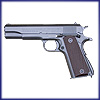
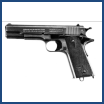
Ninety years ago, the Colt M-1911 handgun debuted in
the U.S. military and quickly gained international appeal because of
its quickness, accuracy and reliability.
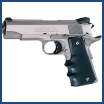
Now, those same qualities have attracted the Tacoma
Police Department to an updated 1911-style weapon as one of two
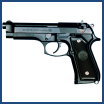
handguns that are replacing the Beretta 96Ds issued to the
department's nearly 400 officers.
"We're the first major police department to
transition to the 1911 in 50 years," said Sgt. Mark Jenkins, the
department's range master and an instrumental player in the selection
of the new guns.
The department saw the 1911-style handgun as a lost
treasure, ignored by other law enforcement agencies because of its
"old-fashioned" image, Jenkins said.
"We found that what had been around for a long
time was better," he said. "We are taking a huge step
forward into the past."
In addition to the Kimber 1911, officers can choose
a Glock, which more than half of the state's law enforcement agencies
already use as their firearm.
"These guns allow our officers to go home at
the end of the day," Jenkins said. "I can better protect you
because I have the best piece of equipment I can find.
"People need to feel secure. That's partly our
job, that's partly their job. It creates the fascination in the tools
we use."
Plus, Jenkins said, many gun owners like to buy the
same weapons as the police have because they know the department has
bought the best guns available.
Tacoma police officials soon will be finalizing the
department's gun orders. The money - a total of $326,000 - will pay
for the new weapons, new holsters, ammunition and training. The old
Berettas will be traded to Glock or Kimber, or sold to a surplus
buyer.
Officers test-fired two Kimber models and three
Glocks, then selected one of the five guns as their new weapon. The
guns will cost the department between $500 and $650 each, depending on
the weapon. The Kimber models are more expensive, Jenkins said.
The new guns are expected in July. During late
summer, each officer will receive three 10-hour training sessions.
Once officers pass the training, they will trade in their old pistols
for the new handguns.
Tacoma is replacing the Berettas because they are
starting to wear out. When the department bought the guns in 1992, the
manufacturer said they would be good for seven to 10 years, said Sgt.
Don Irvin, the department's former range master.
The department expects the new guns to last as long,
Jenkins said.
Across the gun industry, a gun's life expectancy
depends on the model and the number of rounds fired.
"There is no protocol about when you need to
replace a gun," said Seattle police spokesman Clem Benton.
"New technology, better weaponry and updating old equipment - a
lot of things would go into updating equipment."
Pierce County sheriff's deputies have carried the
Sig Sauer 226 for 10 years. More than two years ago, the department
started issuing new deputies the Glock 17 because the weapon is
smaller and fits the hands of more officers, spokesman Ed Troyer said.
Seattle police last replaced their standard-issue
handguns in 1994, and officers now carry a Glock 40, Benton said.
Spokane police also carry the Glock 40, which they
bought in 1999. The department used revolvers until 1988 and then
switched to the 9 mm Glocks for the next 10 years, spokesman Dick
Cottam said.
Tacoma began the process of replacing the Berettas
last spring, when Jenkins and a committee of department officials
started looking for a handgun to replace the Berettas.
"We've been eating this, sleeping this and
breathing this for 10 months," Jenkins said.
The group began by collecting every handgun
available to law enforcement - 37 different gun models from
manufacturers all over the world. One of the group's guidelines was
that "one gun doesn't fit all," Jenkins said.
With the addition of more female and minority
officers, officials recognized that officers have different-sized
hands and strength in their fingers, factors that affect how well they
shoot.
The department heard complaints from officers who
were having a hard time properly gripping and firing the Beretta, a
large gun with a heavy trigger pull. When officers can't hold a gun
properly because of its size, their confidence, control and ability to
shoot accurately is reduced, officials said.
Some officers' bodies couldn't properly absorb their
gun's recoil when fired.
"I hate this gun," said patrol officer
Helen Coubra, tapping the Beretta in her holster. "I've never
felt confident with this gun."
The committee kept such comments in mind when
evaluating the 37 gun models. Committee members also worked without
limits about the type of gun they were interested in selecting,
Jenkins said.
With each model, officials measured the length
between the trigger and the back of the grip to determine how easy the
weapon was to hold and fire. They also looked at the width of the grip
and also at how much strength it took to the pull the trigger.
As part of the tests, more than a dozen officers of
varying sizes test fired the guns, each of which went through scores
of tests to gauge accuracy, safety and reliability.
"These were all good guns," Jenkins said.
"We wanted the one that fit the most people the best."
The committee pored over its measurements and test
results and came up with the Springfield Armory Champion 1911-A1 as
its No. 1 choice. The 1911 is a significantly smaller and lighter gun
than the Beretta.
However, because of haggling over the price, the
Springfield dropped off the list and the Kimbers surfaced.
The 1911 is named for the year the Armed Forces
adopted the gun. Designed by John Moses Browning more than 100 years
ago, the 1911 was fast, accurate and reliable. It saw duty in four
wars but, as technology advanced, the weapon lost its luster and the
military retired the weapon in 1985.
The Tacoma police committee's other choice was the
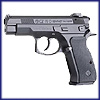
Glock, a black, polymer handgun whose size is between that of the 1911
and the Beretta.
"It's simple, easy to shoot, has a good trigger
and is inexpensive," Jenkins said of the Glock.
The Glock and Kimber models went through additional
testing involving 2,000 man-hours and 10,000 rounds of ammunition per
model. Officers fired the guns without cleaning them, after heating
them and in different weather.
"The guns worked dirty, worked hot, worked in
inclement weather," Jenkins said. "It'll just keep
working."
In March and April, each of the department's
commissioned officers spent more than an hour at the firing range.
Range staff members briefed the officers on the five guns and their
mechanics.
The officers then went to a work bench, handled each
firearm and then "dry fired" the unloaded guns. Afterward,
the officers went to the range, shot the five guns and decided which
one they wanted.
About 70 percent of the officers chose one of the
Glocks; the others selected one of the 1911s.
"I couldn't miss," Lt. Stan Fisk said of
the .45-caliber Glock 21. "This gun is great."
Single-action pistol returns to police duty
In replacing their officers' weapons, Tacoma police
have picked a type of pistol some people - law enforcement officers
included - once considered unsafe.
But experience and training have proved that a
single-action pistol like Kimber's Pro Carry - one of two brands
officers will be carrying later this year - can be just as safe as
double-action guns, officials said.
"It was more a matter of poor training than a
function of a gun," Sgt. Don Irvin said of the single-action
guns.
One problem was that single-action guns required
more steps for law enforcement officers to load, handle and fire the
pistols, compared with the classic revolvers they had used for years.
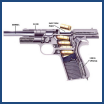
To load a single-action gun like Kimber's 1911-style
pistol, the officer pulls back the slide along the top of the gun.
That moves the first round into the chamber and cocks the hammer.
To prevent the gun from firing, the officer manually
sets a "thumb safety" that locks the slide and hammer in
place and must be flipped down for the gun to fire.
In addition, a "grip safety" locks the
trigger and is released only when the officer squeezes the gun's grip.
A third, internal safety locks the firing pin in
place so the gun won't fire if dropped. Gripping the gun releases the
safety.
"The single-action shoots more quickly,"
said officer Jim Barrett, a firearms instructor.
The Glock, the other choice available to Tacoma
police, incorporates three internal safeties, which are released when
the trigger is pulled.
The recoil discharges the empty casing, reloads the
pistol and cocks the firing mechanism in a quick move. The officer can
fire the pistol by just pulling the trigger.
With a double-action pistol like Tacoma police's
current weapon, pulling the slide and releasing it loads the chamber
and a single pull on the trigger first cocks and then releases the
hammer every time.
The double-action trigger is heavier and takes more
strength and concentration to pull and shoot. Some shooters are not as
accurate because they have to squeeze the stiff trigger so hard it
pulls their aim off target, experts say.
Nevertheless, law enforcement officials switched to
the double-action guns in the late 1980s and early 1990s. A major
reason was because of a problem with unintentional discharges with
single-action guns nationwide.
When single-action guns emerged on the market,
officers didn't properly engage the manual safeties and didn't unload
the guns completely, which frequently caused the pistols to discharge
unintentionally.
"They didn't take the last bullet out of the
chamber," Irvin said.
In 1992, when Tacoma started looking at getting new
guns, Chief Ray Fjetland wanted the department to switch to
double-action only firearms because he believed they were safer than
single-action pistols.
A committee tested three double-action guns,
including the Beretta 96D that was purchased.
"It was the most reliable gun we tested. It
shot any brand of ammunition," said Irvin, who was the range
master at the time. "And we got a really, really cheap deal from
Beretta."
Now, with more extensive training programs in place,
law enforcement officials say they feel more comfortable switching
back to the single-action pistols.
A History Of Tacoma Police Weapons
Over the years, the Tacoma Police Department has issued several
different handguns to its officers:
- Before the 1960s: .38-caliber revolver.
- 1960 to mid-1970s: Smith & Wesson, model 10,
.38-Special revolver.
- Mid-1970s to 1985: Smith & Wesson, model 15,
.38-Special revolver.
- 1985 to 1988: Officers used their owns guns, as
long as they met department standards.
- 1988 to 1991: Glock 17, 9 mm pistol.
- 1991 to late 1992: Officers used their owns guns,
as long as they met department standards.
- Late 1992 to 2001: Beretta 96D, .40-caliber
pistol.
- Coming: Kimber Pro Carry or Pro Carry HD II; or
Glock 21, 22 or 23.
* Staff writer Stacey Burns covers Pierce County
crime and safety issues. Reach her at 253-597-8268 or stacey.burns@mail.tribnet.com.
Source:
The News Tribune |