|
When Being a Good Guy Isn't Enough
A Tactical Analysis of the Tyler Courthouse Shooting and the
Tacoma Mall Shooting
By Syd
For the second time this year, a legally armed
citizen armed with a pistol faced a crazed gunman armed with a rifle and
did not prevail. In February 2005, Mark Wilson engaged David Arroyo on
the steps of the courthouse in Tyler, Texas. Arroyo was wearing body
armor and was armed with a Mak-90 7.62x39mm rifle. While Wilson was able
to land hits from his .45 pistol on Arroyo, Arroyo's body armor stopped
them and Arroyo was able to kill Wilson. On the 20th of
November, at a shopping mall in Tacoma, Washington, Dominick Maldonado
opened fire on shoppers with a Norinco Mak-90 rifle. Maldonado, who at
the age of 20 already had an extensive arrest record, had been taking
methamphetamine for five days. He decided to take out his "rage" against
the world by shooting complete strangers. A legally armed citizen,
Brendan McKown, chose to intervene. He drew his 9mm pistol but did not
fire. Instead, he verbally ordered Maldonado to put down his gun.
Maldonado responded by firing four rounds into McKown's torso. McKown
survived his wounds but was grievously injured including a hit to the
spine which may leave him unable to walk. Both Mark Wilson and Brendan
McKown are the finest kind of people, heroes in truest sense. I would be
proud to call either man my friend. Nevertheless, both men were shot and
did not succeed in stopping the bad guy in their engagement. The good
guys got shot and the bad guys walked away.
These incidents raise troubling questions. This is
not the way things are supposed to go. The good guys are supposed to
come out on top, or at least they shouldn’t lose their lives or become
paralyzed. Were these outcomes simply fate, or could things have been
done differently and a different outcome obtained? How do our ethics and
religious principles affect our tactical decisions? And most
importantly, are there lessons which can be learned from these incidents
that could improve the outcome of a similar encounter in the future?
Analysis of these two fights runs the risk of
criticizing two brave men who I consider to be heroes, and it's my hope
to avoid "Monday morning quarterbacking" although some of that will be
necessary. Everything said here is in the context of deepest respect and
appreciation for the sacrifices these men made.
Firepower
It's an interesting coincidence that in both of
these incidents the bad guy was armed with a Mak-90, a semi-automatic
AK-47 clone chambered in 7.62x39mm. This is a formidable weapon. At
first glance, it would be easy to say, "Well, duh. Rifle trumps pistol.
End of story." Closer examination, however, would suggest that the rifle
versus pistol matching made less difference in the outcome of these
incidents than the first glance might suggest. Wilson landed body hits
on Arroyo before Wilson was shot but the body armor worn by Arroyo
stopped the bullets. A rifle capable of punching through body armor
would have been of great benefit to Wilson in countering Arroyo. McKown did not fire his weapon so the comparison of
guns is irrelevant. Maldonado was willing to shoot and shoot fast
whereas McKown was not. At the range that Wilson first engaged, about 40
to 50 feet, the rifle wielded by Arroyo might have been an advantage,
but the fatal shots fired by Arroyo were fired at close range when
Arroyo came around the truck behind which Wilson had taken cover. The
fatal shots were fired at point blank range. McKown engaged Maldonado at
approximately 20 feet; so again, the rifle's advantage at range is
irrelevant.
Ethics and Religious Principles
The issue of ethics and religious principles comes
into play at two distinct junctures in these incidents. The first is the
deeply felt obligation to defend the innocent and the second is the
Christian affirmation of the sanctity of life.
Both of these brave men chose to engage
voluntarily. They were not personally under an immediate threat. Mark
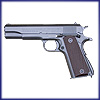
Wilson was in his apartment when he heard gunfire. His apartment had a
clear view of the courthouse steps so he could see what was happening
before he grabbed his Colt and went into the street to intervene. McKown
was in another shop when he heard gunfire and went toward the sound to
try to stop the mayhem. Both men could have opted to stay where they
were and would have remained safe, but they chose to do otherwise. A
hard-nosed, pragmatic analysis viewed from the perspective of personal
survival would say that the wisest course of action would be to take
cover and stay safe. Another CCW holder at the Tacoma mall who was there
with his family chose to get his family to a safe place behind cover and
defend them, but not to engage the crazy shooter. Had I been there with
my family, I'm sure that I would have made a similar choice on the basis
that my first obligation would be to defend and protect my loved ones.
It is clear in both cases that Wilson and McKown
felt a moral obligation to intervene to save the lives of complete
strangers, and they did. For guys like McKown and Wilson, simply taking
cover and protecting themselves is not an ethically acceptable response.
The clearest tactical judgment would tell us to take cover and defend
ourselves, but there are times when our ethical convictions supersede
our better tactical judgment.
McKown is the progeny of a deeply committed
Christian family. His parents are involved in a prison outreach
ministry, and he shares their convictions. By his own report, when he
looked at the boyish Maldonado, he could not bring himself to take the
shot. Instead, he chose to draw his gun and attempt to command Maldonado
to drop his gun. (There is
some confusion about what happened next. Some reports have McKown
re-holstering his pistol and attempting verbal commands. Another report
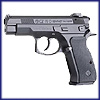
said that when the CZ pistol was found it appeared to have fired one
round and then suffered a “double-feed.” McKown’s own report is not
clear about this. At one point he says that he couldn’t fire at
Maldonado because he looked like a kid and at another point he relates
his attempt to crawl after Maldonado after he was shot because “I missed
him.”) Maldonado's response was to spin around and put four
rounds into McKown's torso. McKown's compassion and respect for human
life had prevented him from taking the shot on Maldonado, even though
Maldonado was already firing and had shot people. God bless McKown, and
I'd love to have him for a next door neighbor. However, the cold
tactical analysis would suggest that the most effective course of action
would be to take the shot when he had it, and make no attempt to
verbally confront or command Maldonado.
Criminal Psychology
For the purposes of this discussion, I will divide
those who criminally use firearms into two broad categories: rational
criminals and crazy shooters. I am aware that other categories could be
suggested such as thrill killers, “crimes of passion” and terrorists,
but those aren’t particularly relevant for this analysis. By “rational
criminals” I mean the folks whose basic “job” is some kind of crime,
such as stick-up guys, burglars and dope dealers. While they may suffer
from poor judgment and other character flaws, they are relatively “sane”
and rational. They use their firearms as tools of the trade and only
employ them to coerce and intimidate others or to defend themselves.
These folks tend to react in more or less predictable and rational ways,
and their responses can often be anticipated. If they’re cornered and
you have the drop on them, they are more likely to surrender and cease
their behavior, since, like other rational people, they don’t want to be
shot and they know they can go to jail, call their lawyer, and be back
out on the street in a few hours. If they aren’t cornered, they will
flee – a rational response to the instinct for self-preservation. This
is not to say that you should ever let your guard down, but with the
rational criminal you have at least a common basis for communication and
expectations.
The “crazy shooter” is a different breed of cat. He
may be truly psychotic and hallucinating, very high on drugs, or in some
other way distressed and no longer operating in a rational framework.
His responses cannot be anticipated. He may be insensible to pain
because of drugs and/or suicidal. He may be hoping for a “suicide by
cop.” The values of the crazy shooter are totally different from those
of rational people, and rational people are rarely able to empathize
with or understand a crazy shooter without advanced professional
training. He is a failed personality who has run out of options. These
folks almost never have a realistic exit strategy for the situation
because most often they are not really planning to live through the
encounter.
Both Maldonado and Arroyo fall into this second
category of crazy shooters. Maldonado has a long felony rap sheet and
had been taking methamphetamine for five days prior to his shooting
spree. Arroyo was perhaps more rational and capable of planning but he
was ultimately suicidal. In the midst of a contentious divorce, he went
to the courthouse to kill his ex-wife and his own son. He put on body
armor which demonstrates planning, but the expectation that he could
just get into his pickup and drive away shows that he was not thinking
rationally and did not really expect to survive the day. He was stopped
by the local police on his way out of town and killed in an exchange of
gunfire with them.
When McKown ordered Maldonado to put down his gun,
he was relating to Maldonado as if he were a rational criminal, but
Maldonado was a crazy shooter, high on methamphetamine, and operating on
a set of values which are totally alien to rational people. Our tactics
must be appropriate for the adversary we face. It is safe to assume that
a person standing in a public place and shooting total strangers is a
crazy shooter and will not respond in rational ways. For a rational
criminal, just the sight of a gun may dissuade him from further action,
although you can’t count on that. With a crazy shooter, an “enemy” to
shoot it out with may be just what he’s looking for.
Movement, Cover and Marksmanship
One factor that was present in both cases is that
neither Wilson nor McKown were moving at the time they were shot. McKown
went into a fixed stance with his gun drawn and issued verbal commands.
He was in an open area of the store and there was no hard cover
available to him. Wilson went prone behind a pickup. Witness Nelson
Clyde III said that Wilson was hit and then went down into the prone
position. Arroyo then came around the pickup and delivered the fatal
shots. This is a report from a friend of Mark’s, Robert Langham, who
viewed the courthouse security camera tape:
“Mark had heard the boom of gunfire from
his loft apartment overlooking the Spring Street side of downtown Tyler…
A glance out his windows would have shown the scene completely: the
gunman advancing, the victims sprawled on concrete. Mark grabbed his
Colt, bounded down the staircase to the sidewalk, crossed the corner
intersection and sprinted to cover behind the first vehicle on the end
of the block… David Arroyo was at that moment stepping forward to finish
killing his own son on the courthouse steps… Mark lined up the sights on
the gunman's bulky back. He shot once, perhaps twice. The range is
inside 20 yards. Less than 60 seconds had passed since he heard the
first shot… Mark Wilson was in street, firing. The courthouse security
camera shows Arroyo turning away from his son bleeding on the steps and
running back to his truck… On camera, three sheriff deputies in the
courthouse door began to fire steadily. Mark shoots again to no effect.
The gunman is wearing an army flak jacket over body armor. Pistol shots
will not penetrate… Wilson and Arroyo exchange shots across the truck
bed popping up and down, perhaps three shots each before Mark falls to
the red bricks, face down. Arroyo walks around the end of the truck,
steps over him and shoots repeatedly…”
It’s hard to find fault with Mark Wilson’s
performance that day from a tactical viewpoint, nor is that my desire.
Wilson did almost everything right. It’s tragic that he couldn’t
accomplish a head shot, that he didn’t grab a rifle to start with or
retreat when Arroyo began to move toward him. If, if, if. If frogs had
wings, they wouldn’t bump their butts when they hop. These are the facts
and the fact is that Arroyo landed a disabling shot before Wilson did.
It should be noted that, against a rifle such as an AK, the bed of a
truck is concealment but it is not hard cover. An FMJ
7.62x39mm round will shoot through the bed of a truck.
What Can Be Learned Here?
“The faster you shoot, the less
shot you will get.” – Jim Higginbotham
Act decisively. When your internal “go” signal is tripped, don’t
hesitate. He who hesitates loses.
Use hard cover when
possible. Learn the difference between hard cover and
concealment.
“Hard cover” is a barrier that will stop bullets and protect
you from incoming fire. “Concealment” is a barrier that hides you from
the adversary but does not stop bullets. Weapons like the AK-47 will
penetrate most building materials. They will also penetrate car
bodies.
Move!
Moving targets are hard to hit. Especially when hard cover is not
available, keep moving. Retreat is an honorable strategy. “He who
fights and runs away lives to fight another day.” Practice shooting on
the move, the faster the better.
Do a “gut check”
Are you really able and willing to pull the trigger on another
human being? If you aren’t, don’t draw a gun on someone who is. I have
talked to a number of people who choose not to carry a firearm for
personal defense. Almost without exception, the reasons given are, “I
just don’t think I could do it,” (meaning, “I can’t shoot someone.”),
or “It would probably just get me in trouble,” (Meaning, “I don’t feel
competent to fight with a firearm.”). I respect that position and I
respect that level of self awareness. If that is your personal truth,
then find other means and strategies for self-defense. On the other
hand, no right thinking human being ever wants to shoot another, and
being repelled by the idea does not necessarily mean that one would be
incapable of armed self defense faced with a real threat. But in all
things, “Know thyself.” Many folks seem to subscribe to a notion that
I have come to call “The Magic Talisman” theory of pistolcraft. They
seem to believe that somehow simply brandishing a handgun will solve
the problem and make the bad guy act right. It might and it might not.
The reality is that pistols require skill, training, and self control
to employ effectively. If you draw it, be prepared to fire.
“A man's got to know his
limitations.” – Dirty Harry
Despite some of our negative stereotypes about police officers,
most police officers have years of specialized training that the rest
of us don't have. Police officers will always appear more tentative
than we might like in situations such as the Tacoma mall because they
are trained to gather as much information as possible before acting.
They know that sometimes bad guys set bombs and lay ambushes. They
have to determine how many bad guys there are, their locations, if
there are hostages and the locations of possible hostages. Many have
seen colleagues fall because they didn’t have adequate information or
backup. Armed citizens are not police officers, but sometimes it pays
to take a cue from the way law enforcement approaches these kinds of
situations.
Know what you can do. Know what your gun can do.
Know what you can do with your gun. A fight is a terrible venue for
new product testing.
Practice hard shots
Practice shooting from weird positions. Practice weak hand
shooting. Practice for head shots. Practice on moving targets if
possible. Practice malfunction clearances. Practice emergency reloads.
Practice everything. Practice a lot. Get some
training. Ammo is cheap and Murphy is alive and well.
Be flexible.
If what you are doing isn’t working, do something else.
“When going to a gunfight, take a
long gun and a friend with a long gun.”
Pistols are close quarters self-defense weapons. All pistols are a
trade-off of performance for convenience. When you go on the
offensive, i.e., attack, all of the shortcomings of the pistol come
into play with a vengeance – puny ballistics, limited firepower,
limited range and difficulty in achieving accuracy quickly. Despite
the silly propaganda from the gun grabbers, no pistols are “assault
weapons.” If they were we wouldn’t bother with equipping our soldiers
with rifles and machine guns.
Epilogue
I still feel a great reluctance to say anything at
all about these two incidents. No matter how carefully one proceeds and
chooses his words, commenting on the sacrifices made by McKown and
Wilson still feels disrespectful. My reluctance to talk about these
incidents was only overcome by the idea that lessons should be learned
and by doing so we honor the fallen and make their sacrifices more
significant by applying their lessons to the next incident that may
arise.
I have tried to avoid using the language of
"winning” and "losing" in reference to Wilson and McKown because winning
and losing is not a simple matter in these incidents. McKown and Wilson
did what they felt they had to do. They were true to themselves, and
both men saved the lives of others even though they paid a terrible
price. You can't call getting shot "winning" and you can't call standing
up for what you believe and saving the lives of others "losing."
Analysis such as this traps us at a point of
abstraction. We can't be there and we can't get into the heads of the
people who were. We can guess and speculate about things which might
have been done differently but we cannot re-create the situation in
order to test our theories. Ultimately, we are left with our revulsion
for the bad guys and reverence for the good guys, fear that we may face
a similar test and hope that somehow things will turn out better for us.

Mark Allen Wilson
An American Hero
1953 - 2005
Texas House Resolution No. 740
R E S O L U T I O N
WHEREAS, The tragic death of Mark Alan Wilson of Tyler on
February 24, 2005, at the age of 52, has brought a profound loss to
his many friends and loved ones; and
WHEREAS, With instinctive courage and selfless resolve, this
valorous Texan confronted a gunman on the steps of the Smith County
Courthouse; reacting to the kind of inhuman crisis that compels
ordinary men to seek cover or flee, Mark Wilson proved to be an
extraordinary man; and
WHEREAS, Mr. Wilson confronted a lethal threat in order to
protect the people of his community, and in his valiant attempt to
save the lives of others, he risked his own safety; and
WHEREAS, The magnitude of the sacrifice that ended his life
all too prematurely is in keeping with the character that was
evident to all who knew him; an active member of the Tyler
community, he used his time on earth to the fullest; and
WHEREAS, Born on January 20, 1953, in Dallas, Mr. Wilson
graduated from MacArthur High School in 1971 and went on to serve
his country with distinction in the U.S. Navy; after his discharge
from the military, this avid sportsman worked as a racquetball
instructor and embraced his entrepreneurial spirit, opening
Tyler's On Target Shooting Range in 1997; and
WHEREAS, A dedicated volunteer, he committed his talents to
help raise money for nonprofit organizations and lent his time to
Heart of Tyler/Main Street projects, including the Texas Blues
Festival and Festival on the Square; and
WHEREAS, Mark Wilson was a true hero, and his example reminds
us that the very best elements of human nature can emerge in the
midst of the chaos and violence that threaten our society; though
this brave man will be missed, his legacy will continue to inspire
all who are privileged to know of him; now, therefore, be it
RESOLVED, That the House of Representatives of the 79th Texas
Legislature hereby pay special tribute to the life of Mark Alan
Wilson of Tyler and extend deepest sympathy to the members of his
family: to his parents, Alex and Lynn Stewart; to his sisters,
Melody and Holly Wilson; to his nieces, Katie and Kristen DeFazio;
and to his other relatives and many friends; and, be it further
RESOLVED, That an official copy of this resolution be
prepared for his family and that when the Texas House of
Representatives adjourns this day, it do so in memory of Mark Alan
Wilson.
Berman
______________________________
Speaker of the House
I certify that H.R. No. 740 was unanimously adopted
by arising vote of the House on March 31, 2005.
______________________________
Chief Clerk of the House
http://www.capitol.state.tx.us/tlo/79R/billtext/HR00740F.HTM
|
|